
Cold water, wind, and waves do more damage to your ears than most surfers realise — and the usual fix (earplugs) has a catch most people don’t talk about.
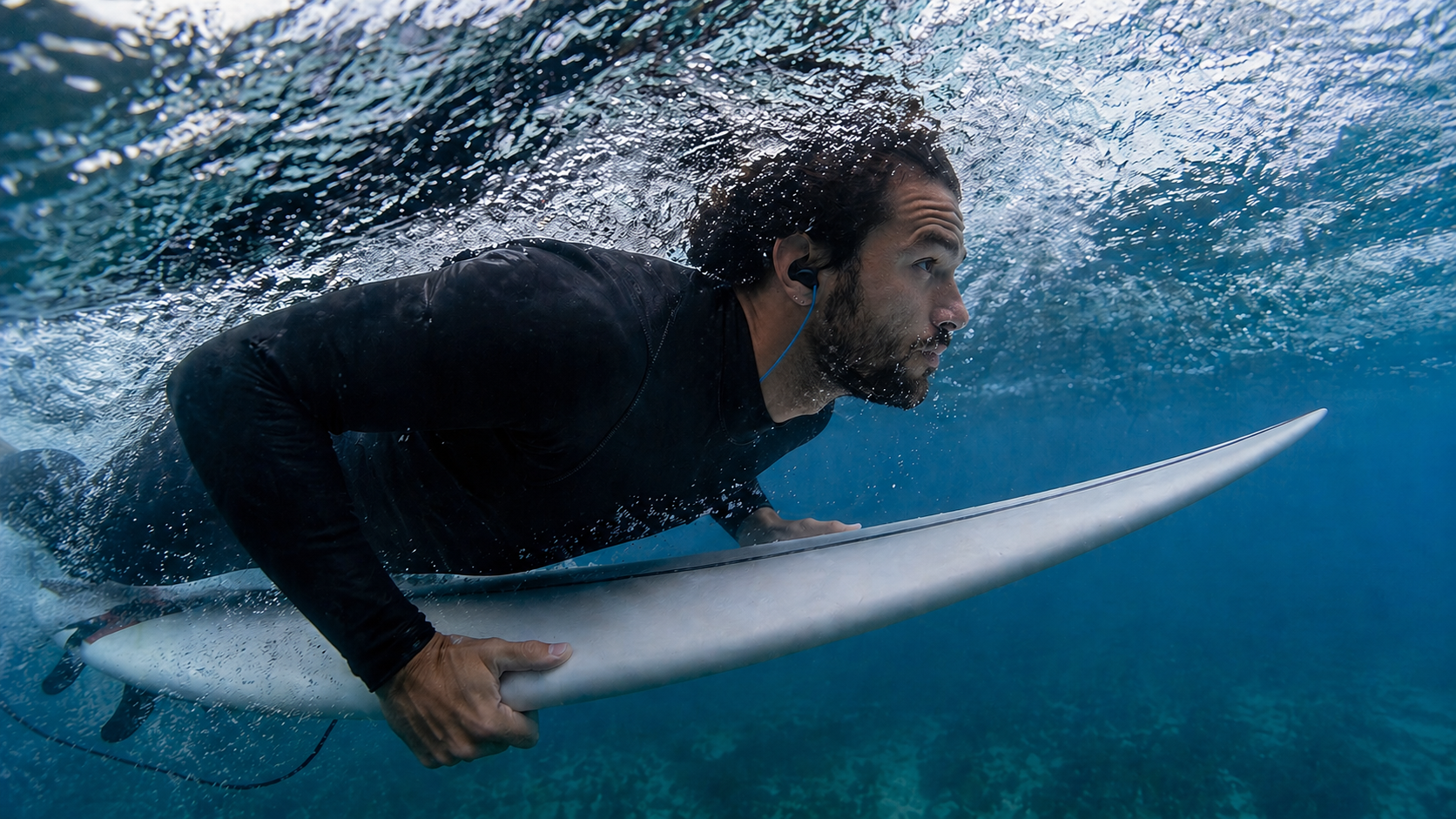
If you’ve surfed for more than a few years, you’ve probably heard about surfer’s ear (exostosis). Cold water and wind trigger your ear canal to grow extra bone — slowly, silently, over years. By the time most surfers notice a problem, the canal has already narrowed significantly. At that point, surgery is the only option.
The fix is simple on paper: wear earplugs every time you surf. In practice, most surfers try plugs for a few sessions, hate the experience, and go back to bare ears. This post explains why that happens, what to look for in surfing ear plugs that actually work, and how to find a fit that stays put through duck dives and wipeouts.
Surfer’s ear isn’t caused by water sitting in your ear canal — it’s caused by your body’s response to repeated cold water and wind exposure. The ear canal reacts by growing new bone, narrowing the canal over time in a condition called exostosis.
It’s progressive and largely symptom-free until the narrowing becomes severe. Most surfers who develop it don’t notice anything wrong until water starts trapping more easily, or hearing begins to dull. By then, years of bone growth have already accumulated.
Cold water is the primary trigger — the colder the water, the faster the progression. But even surfers in warmer climates are at risk with enough sessions per year. The only reliable protection is physical: keeping cold water and wind out of the ear canal before the bone growth starts.
Ask any surfer who tried earplugs and gave up — the answer is almost always the same. They felt cut off. Can’t hear waves approaching from behind. Can’t hear other surfers calling. Can’t judge the break properly. Surfing requires environmental awareness, and traditional earplugs strip that away completely.
Standard foam plugs are designed for noise reduction in industrial settings — they block 25–33 dB across all frequencies. That’s not protection, it’s isolation. Silicone putty creates a full seal too. Even flanged reusable plugs used for swimming block far more sound than most surfers are willing to tolerate for a two-hour session.
The result: surfers make a rational choice. They weigh up feeling deaf and disoriented against the abstract risk of a condition that might affect them in ten years — and most choose to ditch the plugs. That’s exactly why acoustic-filtered earplugs exist. They solve the trade-off.
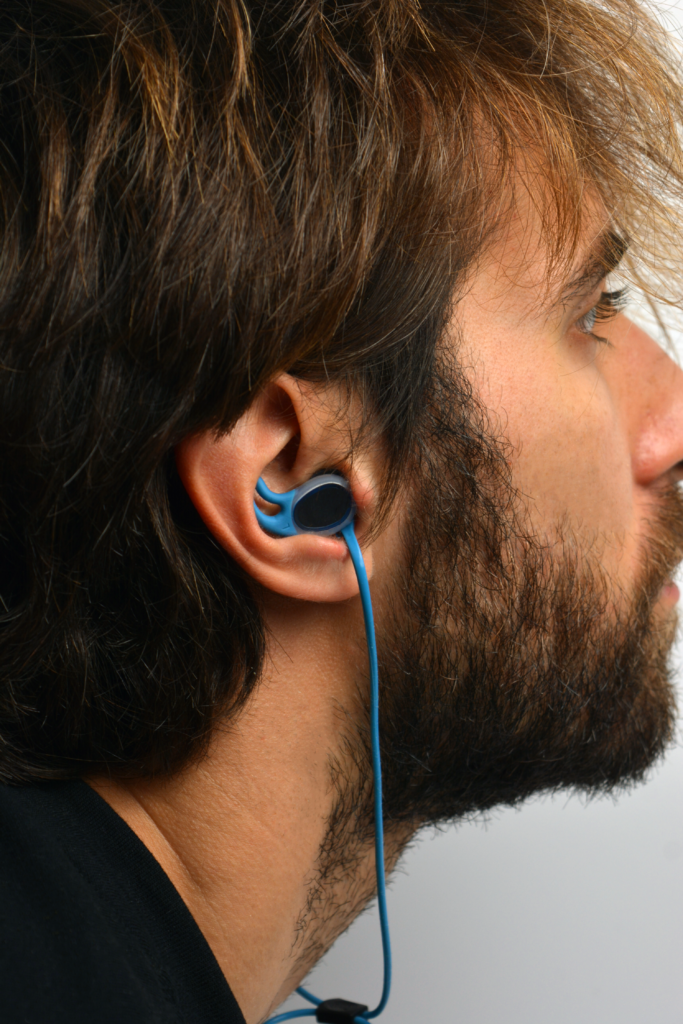 What to Look for in Surf Earplugs
Not all waterproof earplugs are built for surfing. Here’s what actually matters when you’re choosing:
A genuine waterproof seal. This sounds obvious, but many earplugs marketed for water use are water-resistant, not watertight. A proper surf earplug needs to hold a seal through duck dives, wipeouts, and rolling in white water — not just casual swimming.
Sound awareness. This is the non-negotiable for surfing. You need to hear waves, other surfers, and your own instincts. An acoustic filter reduces the harmful frequencies (wind noise, impact) while letting the useful ones through. SEAR’s earplugs reduce sound by 9 dB — enough to cut the damaging cold-wind exposure without making you feel isolated in the water.
Secure fit. A plug that works in a pool may fall out the moment you take a set on the head. The fit needs to hold under pressure — literally. Wings and multiple tip sizes help anchor the plug in the outer ear without relying purely on pressure in the ear canal.
Easy removal with cold hands. After a winter session, fine motor control isn’t what it was on the beach. A leash or cord attached to both plugs means you can pull them out without fumbling, and if one does come loose, it won’t disappear into the ocean.
 Foam plugs — designed for noise reduction, not water. They absorb water, swell, and fail to seal properly. Don’t use them for surfing.
Silicone putty — cheap, comfortable, and reasonably waterproof. They block almost all sound, fall out more easily in waves, and need replacing regularly. Fine for occasional pool use; not ideal for surfing.
Flanged reusable plugs — better seal than putty, more durable, and available with vented designs that allow some pressure equalisation. Sound blockage is still high for most surfers’ comfort.
Acoustic-filtered earplugs — the design built specifically for water sports where awareness matters. Instead of sealing the canal completely, they use a filter or mesh that blocks water ingress while allowing sound to pass at a reduced, safer level. SEAR uses this approach: the acoustic mesh cuts approximately 9 dB, protecting against the wind and cold-water exposure that drives exostosis, without leaving you feeling deaf in the water.
For surfing, acoustic-filtered is the category worth investing in. The difference between 9 dB of reduction and 30 dB is the difference between wearing the plugs every session and abandoning them after two.
About 90% of “earplugs don’t work” complaints come down to fit, not product quality. A plug that isn’t seated correctly won’t seal properly, which means water gets in and the acoustic filter can’t do its job.
The challenge is that ear canals vary significantly between people — in diameter, length, and shape. A one-size design will seal perfectly for some surfers and leak consistently for others. That’s why a sizing system matters.
SEAR’s earplugs come with three tip sizes and four wing sizes — giving you multiple combinations to find a watertight seal that holds through even the most dynamic sessions. The wings anchor in the outer ear, the tip seals the canal, and a leash keeps both plugs connected so a wipeout doesn’t cost you half the set.
Testing the fit before you paddle out: the plug should feel snug but not painful, and when you cup your hand over your ear, sound should noticeably change. If it doesn’t, try a different tip size before assuming the product doesn’t work.
If you surf regularly in cold water, yes. Surfer’s ear (exostosis) develops from cumulative cold-water and wind exposure, and it’s irreversible once bone growth sets in. Earplugs are the only proven prevention. Even surfers in warmer water benefit from protection if they’re in the ocean frequently.
The best ear plugs for surfing combine a watertight seal with an acoustic filter that lets you hear the ocean. Standard foam plugs or silicone putty block too much sound for practical surf use. Acoustic-filtered earplugs — like SEAR — reduce sound by around 9 dB, protecting against the cold-water exposure that drives surfer’s ear without leaving you deaf in the water.
Swim earplugs prioritise a strong seal for pool conditions — typically quieter, lower-impact environments where hearing isn’t as critical. Surf earplugs need to hold in dynamic water, cope with pressure from duck dives, and — ideally — preserve enough sound awareness to surf safely. Acoustic-filtered designs like SEAR work well across both environments.
Yes, and for cold-water surfing this is a solid combination. A hood blocks some wind and cold, while earplugs seal the canal directly. Insert the earplugs first, then pull the hood over. Make sure the leash is accessible so you can remove the plugs easily when you come in.
It varies significantly by water temperature and session frequency, but most cases develop over several years of regular surfing. Cold-water surfers (below 19°C / 67°F) who surf year-round are at highest risk. Many cases go undiagnosed for years because symptoms are gradual. If you’re concerned about existing symptoms, understanding the difference between surfer’s ear and swimmer’s ear is a useful starting point before booking an ENT appointment.
With acoustic-filtered earplugs, the impact is minimal. You’ll notice a slight reduction in ambient noise — wind and impact sound are reduced — but you should still hear waves, other surfers calling, and your surroundings clearly. Most surfers adapt within a session or two and stop noticing them entirely.
Surfer’s ear is one of those conditions that’s easy to prevent and hard to fix. The surgery works, but recovery takes you out of the water for weeks — and it doesn’t undo the years of exposure that got you there. The only version of this story worth telling is the one where you never need the surgery.
Wearing earplugs every session is the habit worth building early. With acoustic-filtered earplugs, there’s no trade-off between protection and awareness — you stay connected to the water and protected from the damage that comes with it.
Ready to surf with your ears protected? Shop SEAR’s waterproof earplugs for surfing — built for water sports, with a 9 dB acoustic filter that blocks water without blocking the ocean.