
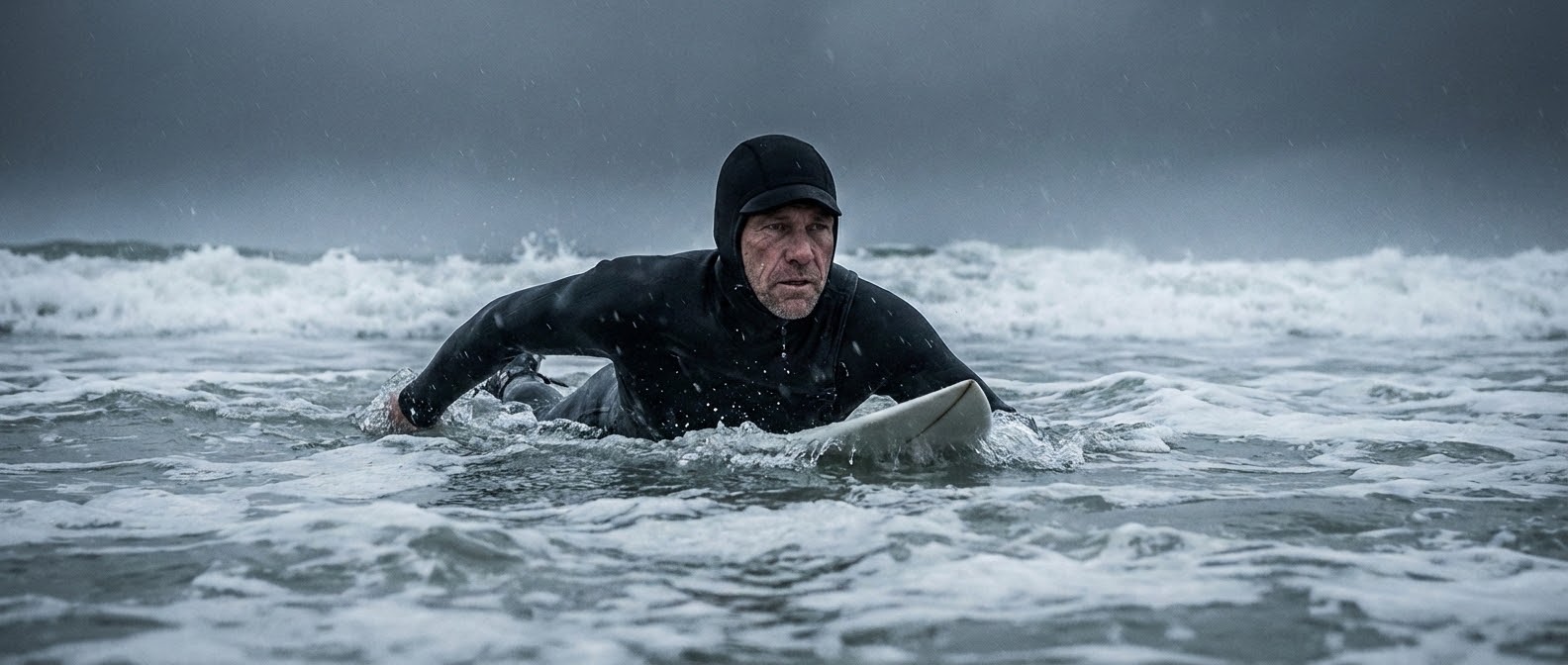
You’re out on the water regularly. The swells are good. The waves roll in cold and clean. But there’s a small, silent price your body pays with every session—one that most surfers don’t notice until it’s too late.
Cold water triggers a bone growth response in your ear canal called external auditory exostosis, or surfer’s ear. It’s real. It’s progressive. And it’s almost entirely preventable.
Here’s what you need to know to protect your hearing before the growths narrow your canal and force you into surgery.
External auditory exostoses are benign bony growths that form inside your ear canal. They’re dense, solid bone—not soft tissue—and they protrude inward, shrinking the space inside your canal.
The condition earned the name “surfer’s ear” because it’s most common in cold-water surfers. But swimmers, kayakers, and anyone exposed to prolonged cold water and wind can develop it. Warm-water surfers are at much lower risk.
The growths themselves aren’t cancerous. They won’t kill you. But when they grow large enough, they trap water, earwax, and debris in your ear canal. That’s when real problems start.
This is the part most surfers miss: surfer’s ear takes years to develop, but it’s cumulative and progressive.
Years 1–5: You feel nothing. The bone is growing, but your canal is still wide open. No symptoms. You’re not aware anything is changing.
Years 5–10: Mild fullness or a plugged sensation after particularly cold sessions. You might think it’s just water trapped in there. It usually clears by evening.
Years 10–15: The sensation becomes more persistent. Water doesn’t seem to drain as easily. You notice muffled hearing in that ear, especially after cold water exposure.
Year 15+: The canal narrows significantly. Exostosis can trap wax and water, leading to chronic infections, earaches, and noticeable hearing loss. At this point, you’re likely considering surgery.
Research shows that each year of cold-water exposure increases your risk by roughly 12%. If you surf 3–4 times per week in cold water, you’re on a faster timeline. Professional cold-water surfers have a 60–80% prevalence of exostosis.
Cold water triggers the growth. Your ear canal responds to cold by attempting to protect itself—a reflexive process that, over time, causes the bone lining to thicken and grow inward.
Early detection isn’t possible without imaging (X-ray or CT scan), but you can watch for these warning signs:
Ear fullness or plugged sensation — especially after time in cold water. You might yawn or shake your head trying to clear it.
Muffled hearing in one ear — sounds seem distant or underwater. It’s subtle at first.
Water stays in your ear longer — drainage is slower. You tip your head and nothing comes out.
Recurring swimmer’s ear infections — if bacteria and water stay trapped, infection follows. You get otitis externa (ear canal inflammation) multiple times per year.
Difficulty cleaning your ear — wax builds up because your canal is narrower.
None of these symptoms means you definitely have surfer’s ear. Only an ENT exam with imaging can confirm it. But if you’re surfing regularly in cold water and you notice these patterns, it’s worth getting checked.
Here’s the hard truth: exostosis bone doesn’t resorb on its own. Once the bone grows, it stays unless you have it surgically removed.
Conservative (non-surgical) management is the first step if your growths are mild:
Surgery becomes necessary when exostosis blocks more than 80% of your canal and symptoms are severe. The procedure is called a canalplasty.
An otolaryngologist removes the bony growths either by elevating the skin behind your ear and drilling the bone out, or by working directly through the canal with chisels. It’s outpatient. Takes about an hour. You go home the same day.
Recovery is straightforward. Pain is minimal. You’re back to normal activity in 2–3 weeks, though you’ll need to keep your ear dry during healing.
The surgery works. But it’s invasive. You can’t surf while healing. And prevention is infinitely simpler.

This is where your power is. Prevention isn’t complicated—it’s about consistency.
Wear earplugs. Earplugs that seal the ear canal prevent cold water and air from triggering bone growth. High-quality earplugs designed for water sports offer the best seal and comfort. This single step cuts your risk dramatically.
Combine earplugs with a wetsuit hood or headband. A hood traps warm water around your ears and blocks wind chill. Together with earplugs, this is the most effective protection. Studies show surfers using both earplugs and a hood have significantly lower exostosis rates.
Use vinegar-alcohol drops. After surfing, dry your ears thoroughly. A 50/50 mix of white vinegar and rubbing alcohol helps evaporate water in the canal and prevents infection. Apply 2–3 drops per ear.
Choose warmer water times when possible. Summer, midday, calm conditions—water temperature matters. Risk increases in cold, windy, winter sessions.
Don’t leave water in your ear. Shake your head, use a towel, hop on one leg, use a hair dryer on low heat. Get the water out. Let your ears fully dry.
None of this requires sacrifice. You’re not giving up surfing. You’re just protecting yourself while doing what you love.
The surfers with no exostosis? They wore earplugs. Consistently. The ones who needed surgery? Most didn’t, or they stopped wearing them.
Can surfer’s ear go away on its own?
No. Once the bone grows, it doesn’t shrink or resorb without surgical intervention. Stopping cold-water exposure slows future growth, but it doesn’t reverse existing exostosis. This is why prevention is critical.
Does warm water cause surfer’s ear?
Rarely. The condition is directly tied to cold water and wind chill. Warm-water surfers and swimmers have much lower prevalence. Temperature is the primary trigger—when your ear canal is cold, bone growth follows.
How do I know if I have surfer’s ear?
A plugged sensation, muffled hearing, slow water drainage, or recurrent infections warrant an ENT visit. They can examine your ear canal directly and order imaging if needed. Don’t guess—get checked.
You can’t control the waves or the water temperature. But you control whether your ears pay the price.
Surfer’s ear is preventable. It’s not a badge of honor. It’s not inevitable. It’s a choice—between 30 seconds of putting in earplugs before every session, or surgery, hearing loss, and chronic infections later.
The best time to start was yesterday. The second-best time is now.
If you’re already surfing or swimming regularly, invest in quality earplugs designed for water sports. A pair with a watertight seal keeps your ears warm, blocks cold water, and stays comfortable all session. Pair them with a hood in winter, use your vinegar-alcohol drops after, and you’ve done what 80% of cold-water surfers don’t: you’ve actually protected yourself.
Start today. Your future self will thank you. SEAR earplugs for surfers and swimmers — engineered to block cold water without cutting off your hearing.