
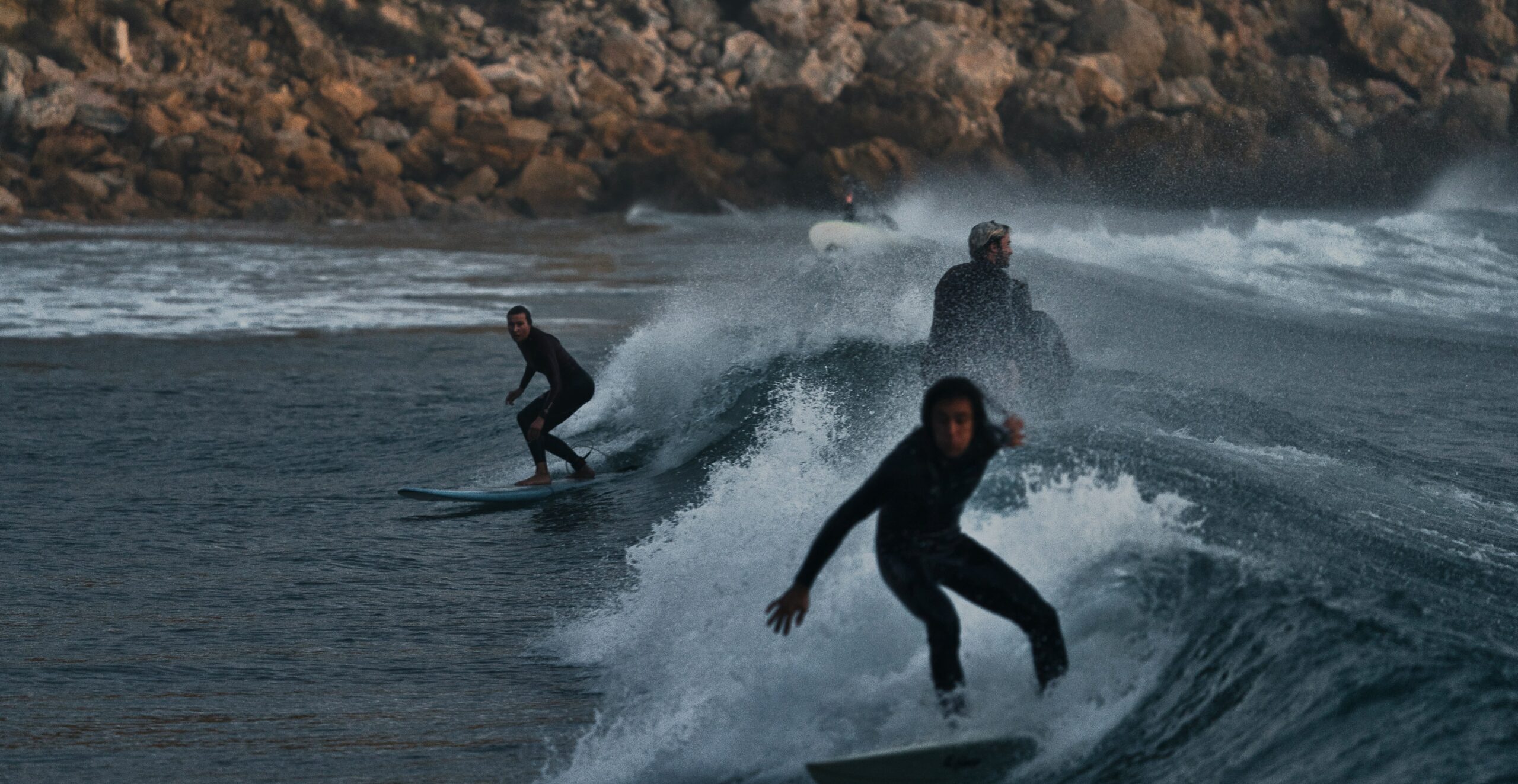
June sits in a sweet spot that too many surfers overlook. The crowds haven’t hit their August peak. The waves are consistent without being overwhelming. And from the Atlantic coast of France down through Spain and into Portugal, you’ll find lineups that suit any skill level, with long evenings to fill in between sessions.
The catch is that the Atlantic in June is still cold. Water temperatures hover between 15°C and 18°C depending on where you are — enough to feel refreshing in the summer heat, and cold enough to drive the kind of ear damage most surfers don’t think about until it’s too late.
Below are five of the best European surf spots for June, what to expect from each, and the one piece of kit that belongs in your travel bag alongside your wax and wetsuit.
Peak summer — July and August — brings full crowds, warming water, and reduced swell. June threads the needle. The North Atlantic still generates consistent groundswell, particularly along the exposed west-facing coasts of France, Spain, and Portugal. Wave heights are more manageable than winter, but the breaks are alive and working.
For progression-focused surfers, June offers something rare: good-quality beach breaks with enough space to actually get waves, before the school holiday crowds arrive. For experienced surfers, it’s the last window to catch spots like Mundaka and Hossegor before the water flattens in July.
One thing June doesn’t change is the cold. Even at the height of European summer, the Atlantic along France and northern Spain stays at 15–17°C — well within the range that causes the slow ear damage that leads to surfer’s ear. Worth keeping in mind across all five spots below.
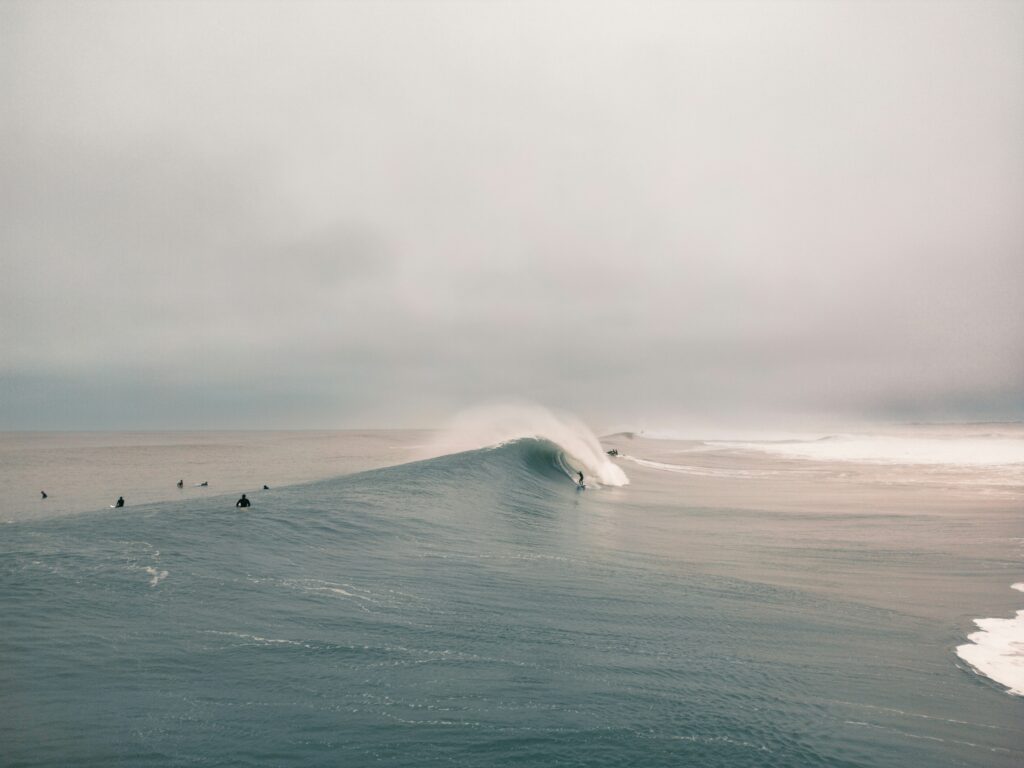 Les Landes, south of Bordeaux, has been the centrepiece of European competitive surfing for decades, and for good reason. Hossegor’s sandbar-fed beach breaks produce some of the most powerful hollow waves on the continent — La Gravière in particular has a reputation for punishing barrels that close out hard and fast.
In June, conditions are more approachable than winter, with the swell direction shifting more southerly and wave heights typically in the 1–2 metre range. Cabirons and VVF (Vieux Vacances France) offer gentler sections that suit intermediate surfers without sacrificing quality.
Water temperature in June sits around 16–17°C. Add the wind off the Atlantic and you’re looking at classic cold-water conditions — exactly the cumulative exposure that drives surfer’s ear over years of regular sessions.
Best for: Intermediate to advanced surfers. Beginners should look to the smaller breaks north and south of the main village.
 Peniche is a peninsula on Portugal’s Silver Coast, roughly an hour north of Lisbon, and it’s earned its reputation as one of the most reliable surf destinations in Europe. The geography means it catches swell from multiple directions — when one side is blown out, another is sheltered.
Supertubos is the headline break: a shallow, fast-running left and right that produces the kind of tubes seen on the WSL tour when Peniche hosts world championship events. But the surrounding breaks — Lagide, Molho Leste, Cantinho da Baía — offer quieter, more forgiving options for surfers still building confidence.
A 30-minute drive south brings you to Ericeira, the only World Surfing Reserve in Europe, with six world-class breaks within 10 minutes of each other. If Peniche is your base, a day trip to Ribeira d’Ilhas is worth building into the itinerary.
Portugal’s Atlantic coast in June runs at around 17–18°C — the warmer end of the European Atlantic spectrum, but still cool enough for a 3/2 wetsuit to earn its keep on longer sessions.
Best for: All levels. The variety of breaks is unmatched in Europe for catering to a group of mixed ability.
 The Basque Country delivers one of Europe’s most underrated surf settings. Zarautz is built around its beach — a 2.5km stretch of sand facing the Bay of Biscay directly, picking up swell consistently from autumn through to June. The beach break produces long walls with multiple peaks, which means even on a busy day you can find a section that isn’t crowded.
The town is compact and surf-oriented, with several schools operating throughout the season. For surfers looking to improve, the combination of quality waves, accessible conditions, and a calm local atmosphere makes Zarautz one of the better learning environments in Atlantic Europe.
The Bay of Biscay runs noticeably cooler than Portugal — expect 14–16°C in June. Cold water by any measure, and the Atlantic wind adds to the exposure.
Best for: Beginners and intermediates. Experienced surfers will enjoy the range of peaks but may want to add Mundaka (below) to the same trip.
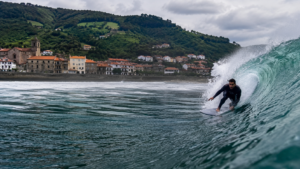 Thirty minutes east of Zarautz, Mundaka sits at the mouth of the Urdaibai estuary and produces one of the longest and most celebrated left-hand waves in Europe. When it’s working — which requires a specific northwest swell — it peels for over 300 metres with a hollow, fast wall that draws experienced surfers from across the continent.
The catch is consistency. Mundaka is highly swell-dependent, and June can be hit or miss compared to autumn and winter. But when it fires, it’s one of those waves that stays with you. Checking forecasts in the week before and being willing to time the session around a swell window is how experienced surfers approach it.
Best for: Experienced surfers only. The wave moves fast and punishes hesitation — beginners should stay at Zarautz beach.
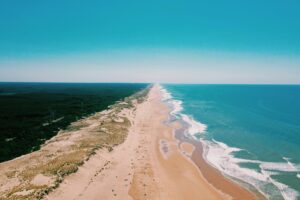 Just south of Bordeaux and an hour north of Hossegor, Lacanau is a surf town built entirely around the ocean. The beach break here is more forgiving than Hossegor’s power pits — longer, more sectiony waves that reward progression and are excellent for building confidence in Atlantic conditions.
The surf scene in Lacanau is well-organised, with schools, board rental, and a lively beach culture that makes it a natural choice for groups or families with surfers of mixed ability. It’s also a natural stop if Hossegor’s peaks feel like too much — you get the same Atlantic swell in a slightly less punishing package.
Water temperature mirrors Hossegor at 16–17°C in June, so the same cold-water considerations apply.
Best for: All levels, particularly groups. Good surf infrastructure and forgiving beach breaks make it one of the most accessible Atlantic spots in France.
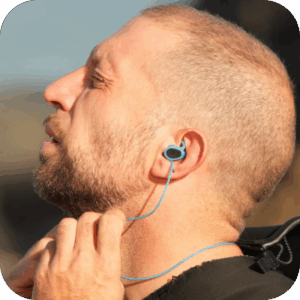 Every one of the spots above sits on the Atlantic coast, where water temperatures in June stay well below 19°C — the threshold most ENT specialists point to as the main driver of surfer’s ear (exostosis). Repeated cold-water exposure triggers slow bone growth inside the ear canal. It’s painless, silent, and cumulative. By the time most surfers notice anything wrong, the canal has been narrowing for years.
A surf trip doesn’t change the maths. A week of twice-daily sessions at Hossegor, Peniche, or Zarautz adds the same exposure as a week of regular local surfing. Cold Atlantic water is cold Atlantic water, whether you’re on holiday or paddling out from your home break.
The reason most surfers don’t wear earplugs is a reasonable one: traditional plugs block too much sound, leaving you deaf to approaching sets, other surfers, and the rhythm of the break. That’s why so many plugs end up at the bottom of a board bag after two sessions.
SEAR’s waterproof surf earplugs are built around a 9 dB acoustic filter — enough to block the cold water and wind driving surfer’s ear without cutting off your awareness of the ocean. Three tip sizes and four wing sizes let you find a watertight seal that holds through duck dives and wipeouts. For a deeper look at what makes surf earplugs actually worth wearing, see our guide to earplugs for surfing — covering fit, filter types, and why most surfers who’ve tried plugs chose the wrong kind.
Available for £39.95 / €45.95, with shipping across the UK and Europe — so whether you’re ordering before you leave or packing them at the last minute, they’ll be in your ears for the first session.
Yes — particularly the Atlantic coast of France, Spain, and Portugal. June offers consistent North Atlantic swell, less crowded lineups than July and August, and a wide range of breaks from beginner-friendly beach breaks to world-class tubes. Water is still cold enough to require a wetsuit on the Atlantic coast, but the conditions are often more approachable than winter months.
Zarautz in the Basque Country, Peniche in Portugal, and Lacanau in France are consistently reliable for beginner to intermediate surfers in June. All three offer long, forgiving beach breaks with surf school infrastructure. Peniche’s variety of breaks makes it particularly versatile for groups of mixed experience.
On the Atlantic coast, yes. Water temperatures in June range from around 14–15°C in northern Spain and the Basque Country to 17–18°C in Portugal. A 3/2mm wetsuit is comfortable for most sessions. Surfers prone to the cold may want a 4/3mm for longer sessions at Hossegor or Mundaka. Even in warm air, cold-water immersion accumulates quickly across multiple sessions a day.
Over time, yes. Repeated cold water and wind exposure triggers slow bone growth inside the ear canal — a condition called exostosis, commonly known as surfer’s ear. It’s cumulative and largely symptom-free until the canal has narrowed significantly. Understanding the difference between surfer’s ear and swimmer’s ear is a useful starting point if you’re not sure which condition you might be at risk of.
If you’re surfing in cold Atlantic water — which applies to all five spots on this list — earplugs are worth packing. A surf holiday typically means more sessions per day than a regular week at home, which means more cold-water exposure. Acoustic-filtered earplugs that preserve sound awareness make it practical to wear them every session without compromising how you surf.
The best European surf spots for June deliver swell, space, and the kind of sessions that remind you why you started surfing. What they also deliver is cold Atlantic water, session after session, with the cumulative ear exposure that comes with it.
Wax, leash, and wetsuit are automatic. Add earplugs to the kit list before you leave — and make sure they’re the kind you’ll actually wear in the water. Shop SEAR’s waterproof surf earplugs — a 9 dB acoustic filter, multiple tip and wing sizes, and a leash to keep both plugs with you from the first paddle-out to the last wave of the trip. Available for £39.95 / €45.95 with shipping across Europe.