
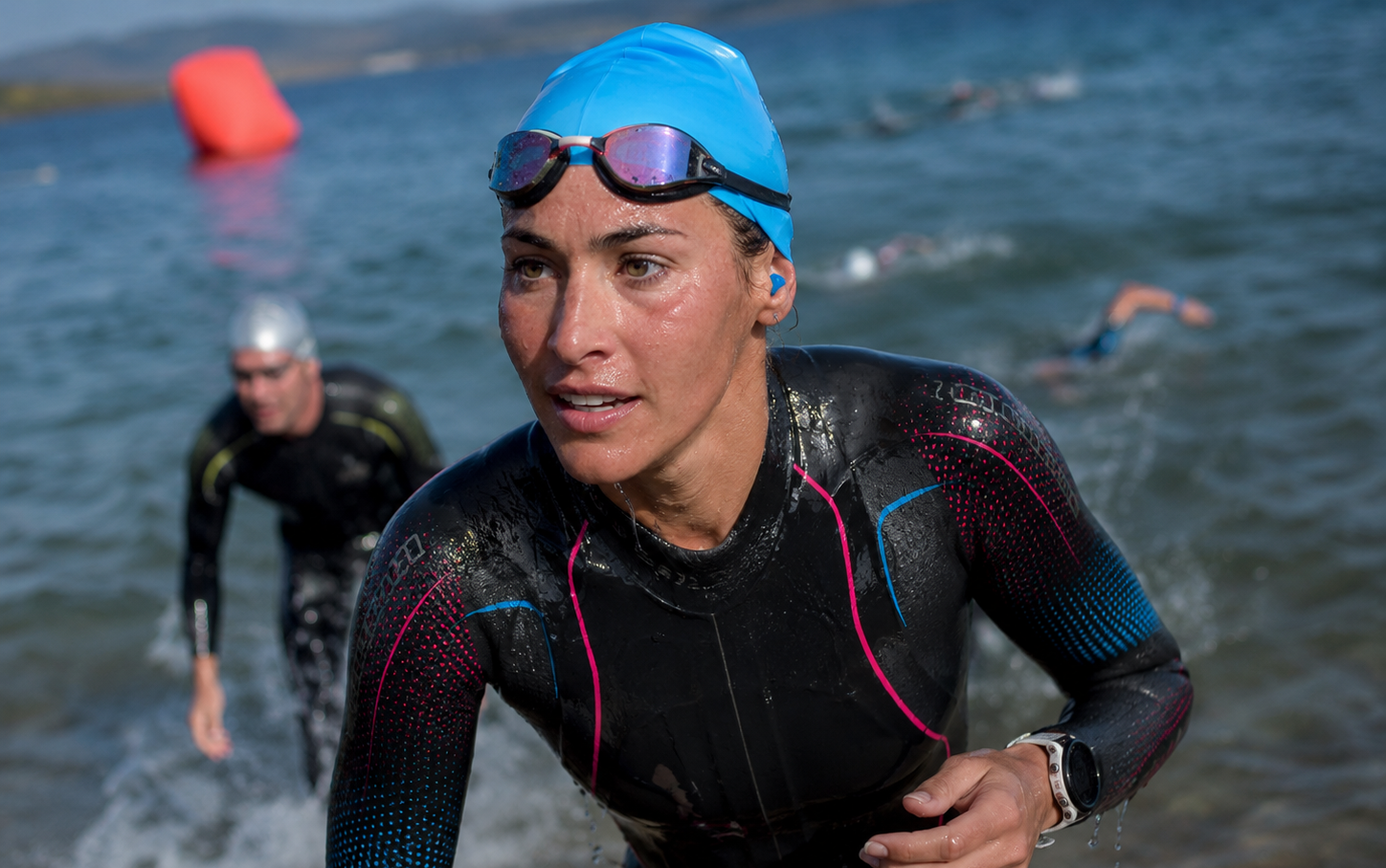
You’ve mapped your training block, planned your brick sessions, and booked your race entry. The swim leg is feeling solid. But here’s a question most triathletes never ask: what are all those open-water sessions doing to your ears?
Unlike a lane swim at your local pool, open-water triathlon training exposes your ears to cold water, bacteria-laden natural water bodies, and the kind of turbulence that arrives courtesy of fifty other athletes at a race start. For a triathlete, this isn’t occasional — it’s three to five sessions a week, from April through to September. The cumulative toll adds up in ways that catch people off guard mid-season.
This guide covers exactly why earplugs for triathletes are performance gear — not a nice-to-have — and what to look for in protection that can actually keep pace with open-water training demands.
Natural water bodies — lakes, reservoirs, rivers, and the sea — carry their own bacterial populations that treated pool water doesn’t. Pseudomonas aeruginosa and related microbes thrive in freshwater environments. When water enters your ear canal and lingers, it softens the skin lining the canal and creates ideal conditions for infection. That’s swimmer’s ear (otitis externa): an infection of the outer ear canal skin that can escalate from mild itch to painful inflammation within 48 hours.
Pool training carries its own risks — chlorine strips earwax and dries out the canal over time — but natural water adds a higher bacterial load on top. Understanding the causes of swimmer’s ear makes clear why open-water swimmers and triathletes face a higher-risk profile than pool-only athletes.
The water temperature matters too. Cold water reaching the eardrum triggers a rapid drop in the inner ear’s thermal equilibrium. Your balance system interprets this as movement when there isn’t any — producing a brief but disorienting vertigo. For a triathlete exiting a 1,500 m swim and heading into T1 at race pace, that moment of wooziness isn’t trivial. It costs time and, in rare cases, causes athletes to stumble or fall in transition.
Most guides treat earplugs as if swimmers take the occasional dip. Triathletes don’t. A typical training block from April to a September race might look like this:
Every one of those sessions is an opportunity for water to enter the ear canal. The more sessions, the more the canal’s natural defences — earwax, slightly acidic pH, dry skin — get worn down. Athletes who don’t protect their ears are running a probability game over a six-month window.
And the consequences extend further than a single infection. Repeated cold-water exposure over multiple seasons is the primary driver of surfer’s ear, a condition in which the ear canal slowly narrows as bony growths form in response to the cold. Surfers are most commonly affected, but any athlete training consistently in cold open water faces the same long-term risk. Training in the Atlantic off Cornwall, the North Sea near Scheveningen, or mountain lakes in the French Alps involves the same cold-water exposure that drives exostosis over years.
Athletes tend to think about ear protection purely in health terms. But for triathletes, there’s a direct performance argument.
Swimmer’s ear means time out of the water. An infection during peak training season sidelines you for seven to ten days — exactly when swim volume should be building ahead of your race. Even mild ear pain disrupts sleep and affects recovery quality. The vertigo that cold water can trigger mid-race slows you down precisely when you need to be sharp.
There’s also a race-day consideration. Open-water starts — especially mass or wave starts — are chaotic. Turbulence, repeated splashing, and contact with other athletes is unavoidable in the first few hundred metres. Earplugs that maintain their seal through that scramble protect your balance and comfort through to transition. Earplugs that don’t stay in during a washing-machine start are essentially useless on race day.
Three things separate genuinely useful earplugs for triathlon from standard foam plugs:
Water protection that holds under dynamic conditions. A flat-water pool is forgiving. Open water with swell, chop, and turbulent starts is not. The seal needs to stay intact through active stroke cycles, head rotation for sighting, and contact with other swimmers. Most foam plugs — designed for noise reduction, not water — absorb water rather than blocking it, which makes the situation worse.
Sound awareness. In open water, situational awareness isn’t optional. You need to hear safety kayakers, course marshals, and warnings from other athletes. Traditional plugs that reduce sound by 20–30 dB don’t just quiet background noise — they cut you off in an environment where being able to hear is a genuine safety concern. A filtered earplug, one that reduces volume without eliminating sound entirely, keeps you connected to your surroundings while still blocking water.
The right fit for open water. An earplug that works comfortably in a pool session can come loose in the turbulence of a race start. Getting the seal right requires matching the tip and wing combination to your ear’s individual anatomy. A sizing system that offers multiple options — rather than a one-size-fits-all — makes a proper seal achievable for a wider range of ear shapes.
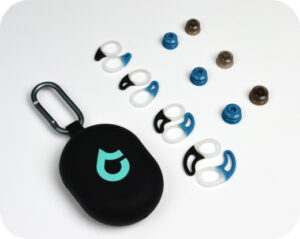
SEAR earplugs are built around exactly these requirements. The 9 dB acoustic filter blocks water and reduces sound pressure without isolating you — safety signals, marshals, and teammates remain audible. The 3-tip + 4-wing sizing system means you can find the combination that holds its seal through open-water conditions, not just calm pool lanes. See how SEAR compares to other earplugs for adult swimmers across different water sport scenarios.
The European triathlon calendar runs from April to October, and water temperatures at the start of the season can be brutal. IRONMAN France in Nice and IRONMAN Barcelona both begin with open swims in water that drops to 16–18°C in May and June. Challenge Almere in the Netherlands sits in cooler North Sea-influenced conditions. Triathlons across Germany, Portugal, and the Atlantic coast of France — from Hossegor down through the Basque coast — involve sustained cold-water exposure from the first training swim of the year.
Cold water accelerates the ear canal changes that underpin exostosis, and the European season starts early — which means ear exposure starts early. For European triathletes particularly, consistent protection from the first open-water session isn’t overcaution. It’s sound management of a long-term asset.
SEAR ships across the UK and Europe. Whether you’re training in a Scottish loch, a Cornish cove, or an Alpine reservoir, the protection is the same: waterproof, acoustically filtered, built for real open-water use. Available for £39.95 / €45.95, with shipping across the UK and Europe.
Yes — earplugs are permitted under both World Triathlon and IRONMAN competition rules. They are not classified as performance-altering equipment. Many experienced triathletes race with them for comfort and ear health reasons, particularly in colder water events.
A filtered earplug won’t impair your balance — and may actively improve it by preventing cold water from reaching the eardrum and triggering the vestibular response that causes brief vertigo. Sighting (lifting your head to check your line) is unaffected by ear protection. Removing the cold-water balance trigger can make sighting more controlled, not less.
Yes, and it’s recommended. A well-fitted earplug sits securely under a standard silicone or latex swim cap. The cap adds an extra layer of protection by reducing water pressure around the ear. Seat the earplug fully before pulling the cap on, and check the fit is still secure before entering the water.
Reusable medical-grade silicone earplugs last through many sessions with proper care. Rinse with clean water after each use and allow them to air dry completely before storing. Replace them if the silicone shows any sign of tearing, if the acoustic mesh becomes blocked, or if the seal starts to feel noticeably less secure than when new.
Swimmer’s ear (otitis externa) is a bacterial infection of the outer ear canal skin, typically triggered by water sitting in the canal and breaking down the skin’s natural defences. Surfer’s ear (exostosis) is a structural change — bony growths that narrow the ear canal over years of cold-water and wind exposure. Both conditions are painful and both are preventable with consistent ear protection. They require very different treatments, which is why understanding the distinction matters.
The triathlon season is at its most demanding between May and September. Open-water exposure peaks exactly when training volume peaks. One bout of swimmer’s ear can cost you a week of swim sessions at precisely the wrong time — and the long-term risk of cold-water exposure is real for anyone training consistently in open water year after year.
Ear protection for triathletes isn’t about being precious. It’s about staying in training long enough to race at the fitness level you actually built. SEAR waterproof earplugs are purpose-built for open-water sport — acoustically filtered so you stay aware, sized to fit securely through turbulent conditions, and reusable across a full season of training and racing.
Explore SEAR’s waterproof earplugs for open-water swimming — available for £39.95 / €45.95, with free shipping across the UK and Europe.