
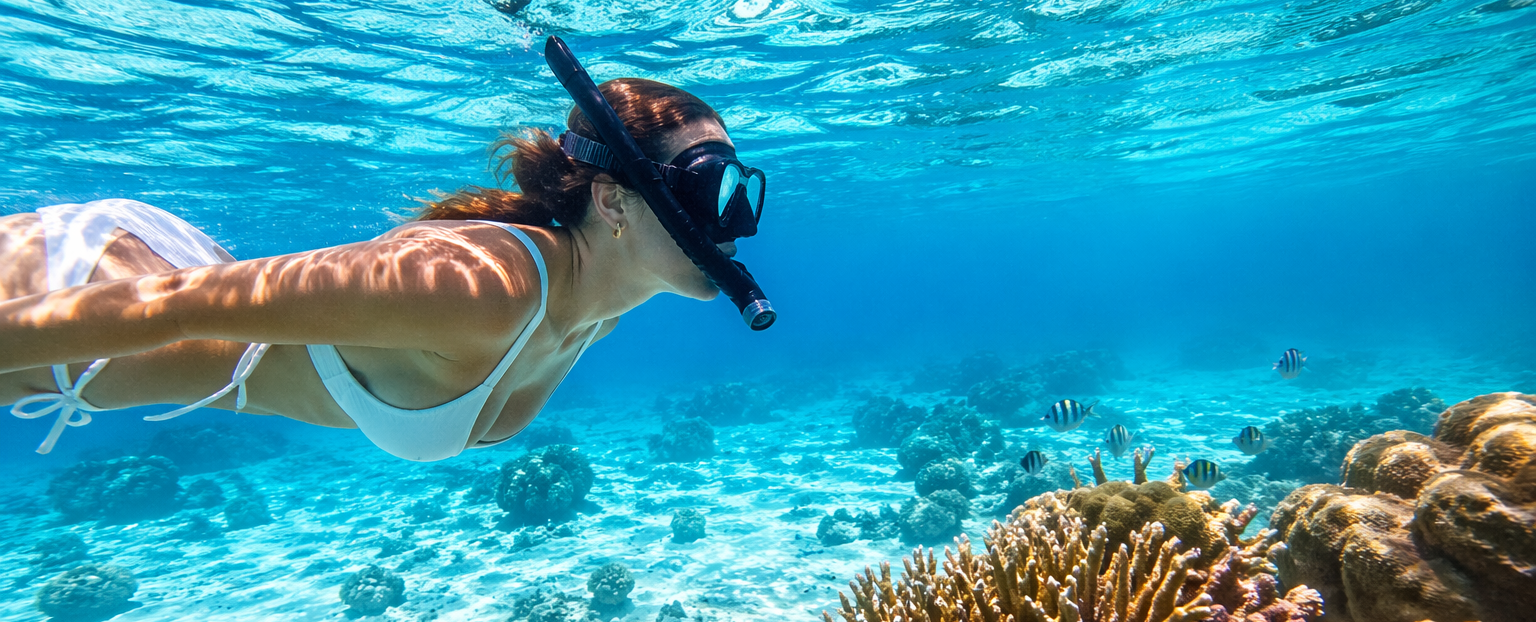
You push off from the reef, sun warming your shoulders, face down in turquoise water. A parrotfish drifts beneath you. This is the reason you booked the trip. Two days later, you’re in the hotel lobby asking the concierge where to find a doctor — your ear is throbbing, itching, and leaking.
Ear infections hit roughly one in ten regular snorkelers. The mechanism is boring and consistent: warm water gets trapped against the eardrum, bacteria multiply, and within 24 to 72 hours your holiday turns into antibiotics. Swimmer’s ear doesn’t care how clean the water looks.
This guide covers why snorkelers are more vulnerable than casual swimmers, what earplugs for snorkeling actually do (and don’t do) below the surface, and how to choose a pair that protects you without turning your reef trip into a silent film.
Snorkeling looks gentle. You float, you breathe, you watch the reef. But from your ear’s perspective, a snorkel session is hours of repeated water exposure in conditions bacteria love.
Three factors stack up. First, warm water. Tropical snorkeling spots sit at 25 to 29°C — close to body temperature and ideal for bacterial growth once water is trapped in your ear canal. Second, repeated immersion. Unlike a quick pool dip, snorkelers stay in the water for one to three hours per session, ears fully submerged most of that time. Third, salt, sand, and reef particles. Open water carries organic matter. Some of it works its way into your ear canal and stays there until your body flushes it out.
Healthy ears have a slightly acidic wax layer that defends against bacteria. Extended water exposure washes that layer away, leaves the canal damp and alkaline, and opens the door to otitis externa — the medical name for swimmer’s ear. If you’ve had swimmer’s ear before, your odds of a repeat climb. The infection scars the canal lining slightly, and that damage makes the next one easier to catch.
Two things happen whenever your face is in the water. Water enters the ear canal — even a small amount. Most of the time it drains out when you stand up. Sometimes, especially if you have narrower canals or residual earwax, it pools against the eardrum and doesn’t leave.
Pressure also shifts, slightly. Surface snorkeling barely changes pressure in your ears. But the moment you duck-dive — even a metre or two to get a closer look at a ray — pressure builds against the eardrum. This is where sealed earplugs can become risky for deeper dives. More on that below.
For most snorkelers, the first problem is the bigger one. Water ingress, not pressure, causes the ear infections. And water ingress is exactly what the right earplugs prevent.
Not every snorkeler needs them. You probably do benefit from earplugs if you snorkel more than once or twice a year, if you’ve had swimmer’s ear before, if you snorkel in warm tropical waters, if you already use ear drops or an ear dryer after every session, or if cold water triggers dizziness or disorientation.
Snorkelers who rarely get ear issues and only snorkel once a summer can probably skip earplugs. But the argument isn’t just infection prevention. It’s consistency. You don’t notice what you don’t lose — and an infection that cancels day three of a seven-day trip costs more than any pair of earplugs.
Worth knowing: standard sealed earplugs are designed for the surface and shallow duck-dives (up to around one metre). If you freedive deeper than that, sealed earplugs become unsafe — they can trap air in the canal and cause barotrauma. Specialised vented designs exist for that use case, but most snorkelers never need to go there.
Not all earplugs are built for snorkeling. Foam plugs soak up water. Cheap silicone plugs slip out during a surface wave or a duck-dive. Here’s what actually matters when you’re choosing ear protection for snorkeling.
A reliable watertight seal. Obvious, but the quality of the seal depends on fit. Plugs that are the wrong size for your canal will leak, no matter how premium the material is.
Sizing options. Ear canals vary dramatically between people. Look for plugs with at least two or three tip sizes so you can find a seal that works for your anatomy. One-size-fits-all rarely does.
Stable fit. A snorkel session involves head turns, current, and occasional duck-dives. Plugs that rely only on compression slip out. Wing-based retention systems — an ergonomic wing that sits against the concha of the ear — hold plugs in place without being uncomfortable.
Sound awareness. This one surprises people. Traditional earplugs block so much sound that you can’t hear your snorkeling buddy, a boat approaching, or your own breathing through the snorkel. That’s a safety problem. Look for earplugs designed with an acoustic filter — they block water while still letting sound through.
Medical-grade silicone. Water sports earplugs go through a lot: salt, sun, chlorine, sweat, body oils. Hypoallergenic medical-grade silicone lasts longer, won’t irritate sensitive ear canals, and stays reusable session after session.
If you already wear earplugs for pool swimming, the same considerations apply in open water — though open-water conditions are harsher. Our guide to swimming ear plugs for adults covers the fit and sizing basics that translate directly to snorkeling.
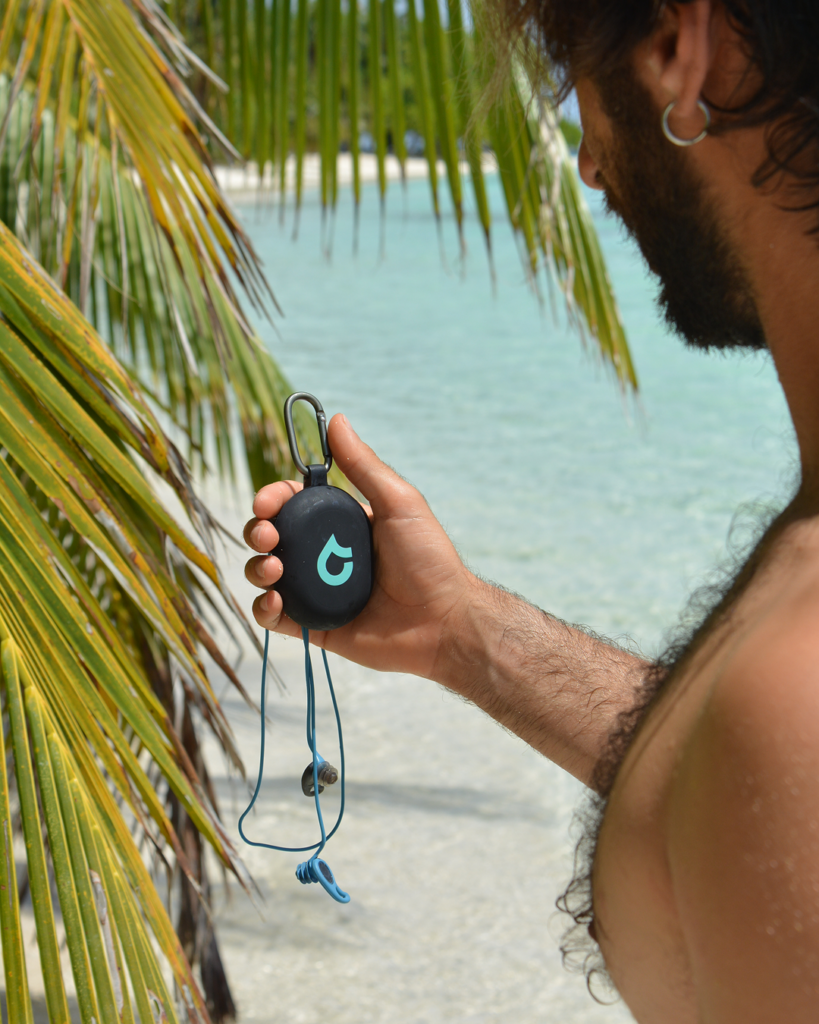
SEAR earplugs are purpose-built for water sports — including snorkeling, surfing, swimming, kayaking, and bodyboarding. A few things to know if you’re comparing options.
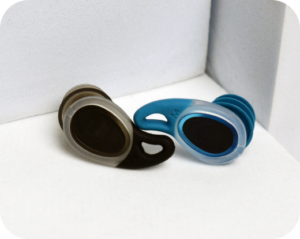
9dB acoustic filter. Sound gets through. You can hear the person next to you, a boat engine, your own rhythmic breathing through the snorkel. Competing plugs typically block around 15dB — enough to make you feel cut off from the group and the water around you.
Wing retention system. Four ear wing sizes (S/M/L/XL) plus three tip sizes (S/M/L) means you can find a combination that seals against water and stays put during a duck-dive. No bespoke moulding or audiologist appointment required.
Medical-grade silicone. Hypoallergenic and reusable. Rinse after a session, let them dry, use them again on tomorrow’s snorkel.
Floatable leash (optional). A small thing that saves you when a plug pops out mid-session — it floats, you spot it, you pick it up. Pair it with the magnetic case and you won’t misplace them between boat trips either.
If you’re also a regular pool or open-water swimmer and want a broader comparison of what’s out there, our review of the best earplugs for swimming adults in 2026 covers the trade-offs of every major water sports earplug on the market.
Yes — most snorkeling happens at the surface, which is exactly what purpose-built water sports earplugs are designed for. Keep duck-dives shallow (within a metre or so) and sealed earplugs are fine. If you plan to freedive deeper than that, remove the earplugs for those dives and equalise normally. For scuba diving, sealed plugs are unsafe at any depth.
Not if you choose the right pair. Cheaper plugs block sound heavily and leave you feeling isolated, which is a safety issue when you’re sharing the water with boats and other swimmers. Look for earplugs with a low-decibel acoustic filter — around 9dB. You’ll hear conversations, boat engines, and your own breathing while water stays out.
They solve different parts of the problem. Earplugs stop water getting in during the session. Ear drops (typically isopropyl alcohol and acetic acid solutions) dry out whatever water did sneak through afterwards. If you’re prone to infections, use both — earplugs during snorkeling, drops after. Earplugs are the prevention layer; drops are the backup.
Yes, and they probably should. Children’s ear canals are narrower, which traps water more easily, and an ear infection mid-holiday derails the whole family’s plans. Size-appropriate water sports earplugs with a wing retention system stay put even when kids are jumping off the boat or chasing fish on the reef.
Yes. Sealed earplugs are unsafe for scuba diving because they trap air that can’t equalise with changing pressure, risking barotrauma. If you plan to dive below a few metres, either use dive-specific vented designs or no earplugs at all — and follow your instructor’s guidance on equalisation.
Ear infections don’t happen because snorkelers are careless. They happen because warm water, trapped in the ear canal for hours, is exactly the environment bacteria need. Earplugs are the simplest, cheapest intervention you can make — and the one that actually stops the problem at the source.
If you snorkel regularly — or you’ve got a summer trip coming up — invest in earplugs designed for the water, not repurposed from another use case. SEAR earplugs are built for water sports: watertight seal, 9dB acoustic filter so you stay aware, stable wing retention, and no bespoke moulding required.
Your holiday deserves better than a mid-week trip to the pharmacy.