
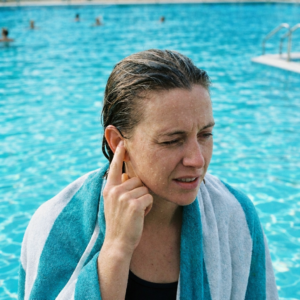
 You peel off your swim cap, grab your towel, and notice it: a persistent itch deep in your ear canal. A few hours later, it’s turned into a dull ache. By morning, it hurts to touch the outside of your ear. If this sounds familiar, you’ve probably had swimmer’s ear — and you’re not alone.
Swimmer’s ear (otitis externa) affects millions of swimmers every year. It’s not a minor inconvenience. Left untreated, it can sideline you for days, spread to surrounding tissue, and in rare cases require antibiotics or specialist care. The frustrating part is that most swimmers don’t understand what causes it — so they keep getting it.
This post breaks down exactly what triggers swimmer’s ear, who’s most at risk, what the early signs look like, and when to get checked out by a doctor. By the end, you’ll know how to spot it early and take action before a minor irritation becomes a real problem.
Swimmer’s ear is an infection of the skin lining the outer ear canal — the passage between your outer ear and your eardrum. It’s almost always bacterial, though fungal cases do occur, particularly in people who’ve been on antibiotics or who swim in warm, humid environments.
The most common culprits are Pseudomonas aeruginosa and Staphylococcus aureus — bacteria that thrive in wet conditions. Under normal circumstances, your ear canal keeps them in check. The slightly acidic pH, the protective layer of earwax, and the dry skin create a hostile environment for bacterial growth. When any of these defences breaks down, an infection can take hold.
It’s worth noting that swimmer’s ear is completely different from surfer’s ear. Surfer’s ear is a bony growth in the ear canal caused by repeated cold water and wind exposure — a structural change to the bone, not an infection. Swimmer’s ear is an infection of the skin. Both are painful, both are preventable, but they have different causes and different treatments.
Most cases of swimmer’s ear don’t come from a single cause. It’s usually a combination of factors that together tip the balance from healthy ear to infected one. Here are the most common triggers.
This is the big one. When water gets into the ear canal and stays there, it softens the skin and creates the warm, moist environment bacteria love. The ear canal’s shape — narrow and curved — means water doesn’t always drain out naturally. Frequent swimmers are especially exposed because water enters the canal repeatedly, giving bacteria more opportunities to establish an infection.
Chlorine kills bacteria in the pool — but it also strips earwax from the ear canal and dries out the delicate skin inside. Over time, that protective barrier breaks down. Swimmers who train regularly in chlorinated pools are trading one threat (waterborne bacteria) for another (a compromised ear canal that’s more vulnerable to infection).
Ocean water carries its own bacterial load — including Pseudomonas and other organisms. Salt water is also hygroscopic, meaning it draws moisture out of surrounding tissue. The result: the ear canal skin dries out and cracks, making it easier for bacteria to penetrate. Surfers and open-water swimmers face this every single session.
Freshwater environments often contain higher concentrations of environmental bacteria than treated pools or even the sea. Lakes and rivers can harbour Pseudomonas, E. coli, and other pathogens. Open-water swimmers and triathletes training in natural water should treat ear protection as non-negotiable.
Cotton swabs are one of the worst things you can put in your ear. They remove protective earwax, push debris deeper into the canal, and create tiny abrasions in the skin. Even fingernails and towel corners can cause micro-tears. Any break in the skin’s surface is an entry point for bacteria.
If you have eczema, psoriasis, or seborrheic dermatitis, the skin in your ear canal may already be compromised. Flaking, inflammation, and reduced skin integrity all increase the risk. Swimmers with chronic skin conditions often find they’re more prone to recurrent swimmer’s ear — even with good hygiene habits.
Two people can swim in the same pool for the same amount of time and have completely different outcomes. Individual ear anatomy plays a role — some people’s ear canals drain more effectively than others. Earwax composition matters too: some people naturally produce more earwax, which offers better protection.
Frequency is a major factor. Recreational swimmers who get in the water twice a week have far less cumulative exposure than competitive swimmers training twice a day. The more sessions, the more water enters the canal, the more the protective barriers are worn down.
Wearing earbuds or hearing aids between swimming sessions can also contribute — they trap moisture and reduce air circulation in the canal, extending the window of vulnerability after each swim.
Swimmer’s ear develops in stages. Catching it early makes a significant difference in how quickly it resolves.
Mild stage: Itching inside the ear canal, some redness, mild discomfort. The ear may feel slightly full. This is the window where good ear care can stop the infection in its tracks.
Moderate stage: Pain that intensifies when you press on the tragus (the small flap at the front of your ear) or tug on the earlobe. More pronounced redness, some swelling, and possibly a clear or whitish discharge. Hearing may become slightly muffled.
Advanced stage: Severe pain, significant swelling that may partially block the canal, a feeling of fullness, and potentially fever. At this point, medical attention is necessary.
The key giveaway that separates swimmer’s ear from other ear problems? Pain when you move or press on the outer ear. Inner ear problems don’t typically cause this.
 Mild swimmer’s ear may resolve on its own with proper care — keeping the ear dry, avoiding further water exposure, and using over-the-counter acidic ear drops if recommended by a pharmacist. But there are clear signs that you need to see a doctor.
Get checked out if: pain is severe or spreading to the jaw or side of the face; there’s significant swelling inside or around the ear; you have a fever; there’s thick, coloured, or foul-smelling discharge; symptoms haven’t improved after 48–72 hours; or you have any reason to think your eardrum may be perforated.
Doctors typically treat swimmer’s ear with antibiotic or antifungal ear drops. Oral antibiotics are rarely needed unless the infection has spread beyond the ear canal. A full course of treatment usually takes 7–10 days, and you’ll be advised to stay out of the water until it clears.
Don’t try to clean the ear yourself once symptoms are present — this almost always makes things worse. And avoid cotton swabs, oil drops, or hydrogen peroxide without advice from a healthcare professional.
Yes. Any water that enters the ear canal and doesn’t drain properly can create the conditions for swimmer’s ear. Showers are a less common cause than swimming because exposure is briefer, but people who shower frequently or tilt their head under the flow can develop it. The same prevention principles apply — keep the ear canal dry after any water exposure.
No. Swimmer’s ear is an infection of your own ear canal skin — it doesn’t spread person to person. However, swimming in water with high bacterial contamination increases everyone’s risk. If a pool has poor water quality or a natural water body is flagged for high bacteria levels, that’s a shared risk, not a contagious one.
With proper treatment, mild to moderate swimmer’s ear typically clears up within 7–10 days. Severe cases can take longer. Without treatment, it can persist and worsen. The fastest route to recovery is stopping water exposure, following your doctor’s advice on drops, and resisting the urge to put anything in the ear canal.
It depends on context. Diluted saline can be mildly soothing and antibacterial. But ocean water — at much higher salinity, with its own bacterial load — strips earwax and dries out ear canal skin, increasing vulnerability. Regular surfing and sea swimming are genuine risk factors for swimmer’s ear, especially without ear protection.
Yes — earplugs are one of the most effective preventive tools available. By keeping water out of the ear canal, they eliminate the primary trigger. The key is choosing earplugs that actually seal the canal without causing irritation or discomfort. Understanding how swimming earplugs work and what to look for is the best place to start.
Swimmer’s ear is predictable. Once you understand what causes it — water sitting in the ear canal, a compromised skin barrier, bacteria finding their way in — prevention becomes straightforward. Keep the ear canal dry, avoid putting things in your ears, and give your ears time to recover between sessions.
The most reliable line of defence is a well-fitting earplug that keeps water out from the start. The best earplugs for swimming hold their seal through flip turns, open-water swells, and everything in between — without muffling the world around you.
SEAR earplugs are purpose-built for water sports — moulded to fit your ears precisely, with a seal that holds where foam and flanged alternatives fail. If swimmer’s ear keeps coming back, your earplugs may be part of the solution. Explore SEAR earplugs in our shop and give your ears the protection they’ve earned.